




Pizza is a favorite food all over the world. Pizza will fit most of the lifestyles, be it a quick lunch, a dinner with the family, or a weekend snack. However, one question that is commonly posed, especially by those who are conscious of their diet, is how many calories are in a slice of pizza? It is not as simple as a single figure since the number of calories in pizza is subject to change depending on the ingredients, the type of crust, the toppings, and the size of portions.
In this detailed guide, we will break down the calories contained in a slice of pizza, explain which factors influence the calories, and explain the carbs in pizza. We will help you make informed decisions without sacrificing your favorite food.
Understanding Calories and kcal in Pizza
Calories and kilocalories (kcal) are essentially the same thing in everyday nutrition. Food labels that indicate calories normally refer to kilocalories. Whenever people query about how many calories are in a slice of pizza, they are asking about the amount of energy that the slice offers.
On average, a slice of pizza can be between 200 and 300 kcal, and this figure can be much higher in terms of toppings and the type of crust used.
How Many Calories in a Slice of Pizza on Average?
On average, a regular slice of cheese pizza contains:
- 200–285 kcal per slice
- About 25–36 grams of carbohydrates
- Moderate fat and protein content
This contributes to pizza being a rather high-energy food. The crust (refined carbs), cheese (fat and protein), and toppings are major sources of the calories.
And so, when you are wondering how many calories are in a pizza, the answer is that it depends on what is on it—but even an unadulterated slice is a significantly large source of calories.

Calories by Pizza Type
When discussing how many calories are in a slice of pizza, it should be noted that not all pizzas are made the same. Choose your pizza: depending on the toppings, how much cheese, and the way of preparation, the amount of calories may vary greatly. A comparison of the common types of pizza and the calories in comparison is provided below.
Cheese Pizza
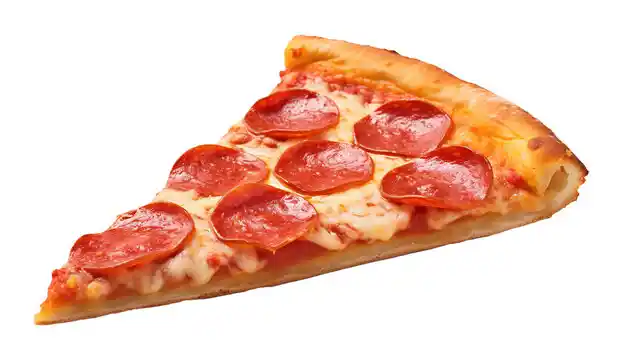
Cheese pizza is often used as the standard reference when calculating how many calories are in a slice of pizza.
- Calories: 230-285 kcal per slice
- Why: Calories mainly come from the refined flour crust and full-fat cheese
- Best for: Those looking for a simpler option without added meats
Cheese pizza offers a balanced mix of carbs, fat, and protein, making it a moderate-calorie choice when eaten in controlled portions.
Pepperoni Pizza
While keeping track of the calories in pizza, pepperoni slices are easy to add up, particularly when they are large in portion. Pepperoni is a very popular topping as well as one of the high-calorie items.
- Calories: 280–320 kcal per slice
- Why: Higher fat content from processed meat and extra oil
- Nutritional note: Increased sodium and saturated fat
Vegetable Pizza
Vegetable pizza is often considered a lighter option. Veggie pizza can be a smart choice for those looking to reduce their calorie intake while still enjoying a full slice.
- Calories: 220–260 kcal per slice
- Why: Vegetables add volume without many calories
- Bonus: Slightly higher fiber content
Meat Lover’s Pizza
A single slice may contain as many calories as two lighter slices of pizza. This pizza is loaded with sausage, beef, chicken, or bacon.
- Calories: 320–350+ kcal per slice
- Why: Multiple meats increase fat and protein
- Best for: High-energy meals, not calorie-restricted diets
BBQ Chicken Pizza
BBQ sauce and chicken change the calorie profile. This type often surprises people, tracking how many calories are in a slice of pizza.
- Calories: 270–310 kcal per slice
- Why: Sugary BBQ sauce and added cheese
- Watch out for hidden sugars in sauces

Hawaiian Pizza
Topped with ham and pineapple, though fruity, it’s not necessarily lower in calories.
- Calories: 260–300 kcal per slice
- Why: Ham adds fat and sodium; pineapple adds natural sugar
White Pizza
Made without tomato sauce, using cream-based sauces instead. White pizza is one of the highest-calorie pizza styles.
- Calories: 300–350 kcal per slice
- Why: High-fat dairy sauces and extra cheese
Deep Dish or Pan Pizza
If you’re tracking how many calories in pizza, deep-dish slices often count as a full meal on their own. Crust thickness plays a huge role in calorie count.
- Calories: 330–400+ kcal per slice
- Why: Thick crust, more oil, and more cheese
Thin-Crust Pizza
A lower-calorie alternative.
- Calories: 200–230 kcal per slice
- Why: Less dough means fewer carbs and calories
Gluten-Free Pizza
Calories vary widely.
- Calories: 230–300 kcal per slice
- Why: Gluten-free flours can be higher in starch
Understanding how many calories are in a slice of pizza requires looking beyond just the slice itself. Toppings, sauces, cheese, and crust style all influence calorie content. Choosing lighter toppings, thinner crusts, and mindful portions can make a noticeable difference in total intake.
How Crust Style Changes Calorie Count
When individuals inquire how many calories in a single slice of pizza, the crust can be the most significant issue in determining the answer to the question. The crust forms a large percentage of the total calories of the pizza since it is mostly composed of flour, oil, and yeast, which are all sources of carbohydrates and energy. One could argue that despite the identical toppings, the crust style alone can decrease or add to the total number of calories in a slice dramatically.
Thin Crust
- Fewer carbs and calories
- Around 200–230 kcal per slice
Regular Crust
- Balanced thickness
- Around 250–280 kcal per slice
Deep Dish or Pan Pizza
- Thicker dough and more oil
- 300–400 kcal per slice

Carbs in Pizza: What You Need to Know
One of the most common nutritional concerns is carbs in pizza. Pizza crust is made from refined flour, which is high in carbohydrates.
A typical slice contains:
- 25–36 g of carbs
- Mostly refined carbs
- Low fiber unless whole-grain dough is used
For people managing blood sugar or following low-carb diets, this is an important consideration. However, pairing pizza with protein or vegetables can help slow digestion and reduce blood sugar spikes.
Why Portion Size Matters More Than You Think
When people ask how many calories are in a slice of pizza, they often assume all slices are the same size—but they aren’t.
- Large restaurant slices can be 1.5x–2x bigger
- Extra cheese increases calories significantly
- Multiple slices add up fast
Two average slices can easily reach 500–600 kcal, which is similar to a full meal.
Conclusion
Understanding how many kcal are in a slice of pizza will help you to make informed and balanced food decisions—particularly when you like pizza. As this guide has demonstrated, there is no absolute answer to the question of the number of calories in a slice of pizza. The amount of calories may differ greatly in accordance with the style of crust, toppings, quantity of cheese, and the size of the portion. A thin slice of vegetables has approximately 200 calories, whereas a deep-dish or stuffed-crust slice of pizza has more than 350 calories.
It is also important to note that carbs in pizza are essential, and they are primarily refined flour in the crust. Finally, it should be known that pizza should be consumed consciously and not prohibited. The information about the number of calories in pizza will enable you to feast on your preferred slices of pizza without feeling guilty, overindulged, or misinformed. Knowing what is in every slice will help you make smarter choices, indulge, and have a healthy relationship with food, slice by slice.
Frequently Asked Questions
How many calories are in a normal slice of pizza?
The average size of a pizza slice has 200-285 calories, varying with the thickness of the crust, the volume of cheese on it, and additional toppings. Cheese pizza remains at the bottom of the chart, whereas meat toppings also add calories, as they contain added fat and protein.
How much pizza is 200 calories?
Roughly ¾ of a thin-crust cheese slice or about ⅔ of a regular-crust slice equals 200 calories. Portion size, cheese quantity, and toppings play a big role, so calorie counts can vary slightly.
Is one slice of pizza ok on a diet?
There is one way in which a slice of pizza can fit into a diet, though in moderate amounts. Getting thin crust and veggie toppings and balancing out the rest of your meals are a great way to control calories without avoiding something that you love.
How much pizza is 400 calories?
Pizza, 1 regular slice with additional toppings or about 1 1/2 slices of thin-crust pizza, contains approximately 400 calories. A single slice of a larger slice of pizza or a deep dish can contain 400 calories.